









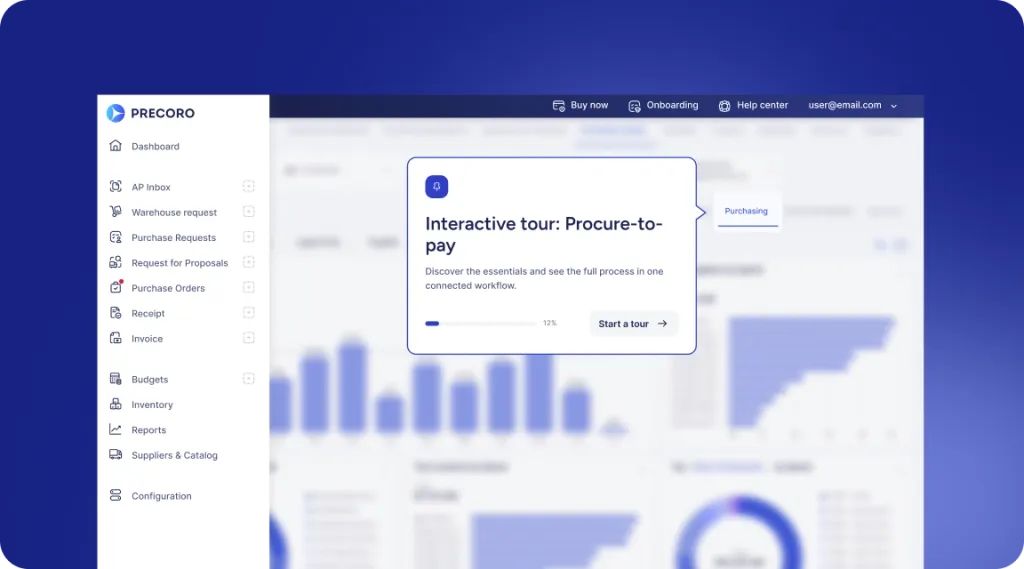
 Explore Precoro's features












Stay ahead of the curve with our latest content
Subscribe to our newsletter and get fresh insights every month

What is risk management?
A structured process designed to identify, assess, and control potential events that could negatively affect the company. Risk management helps organizations anticipate supply disruptions and take steps to minimize their impact on the business’ operations. Examples of risk mitigation practices include supplier diversification, regular contract reviews, and more stringent contract terms to prevent losses.
Read more on related topics, and get real insights
Stay ahead of uncertainty. Our blog explores risk management frameworks, proactive strategies, and tools for protecting your business.

How To Overcome The Current Supply Chain Disruptions As A Manufacturer
As a manufacturer, your factory floor may be where your products come to life. Yet the goings-on in your factory can mask the critical role external actors play when asking for the inputs you need to confirm product delivery to the end user.

Importance of Risk Management in Procurement
Risk is probably one of the most pervasive topics today in sourcing and supply management. The reason for this is quite logical: the more dependent on its suppliers a company becomes, the more likely that a disruption in supply anywhere along its supply chain can result in the company’s failure to meet its commitments.

7 Basic Types of Supply Chain Risks
Read about the main supply chain risks businesses face, their possible causes, and mitigation strategies.
See how Precoro fits into your team's workflows
A personalized demo, built around your team’s challenges, led by experts who understand what matters.