ZIP competitors in 2026. ZIP alternatives
ZIP is a major purchase orchestration system, but no tool is perfect for all companies. This guide evaluates 11 procurement-focused ZIP alternatives.

ZIP is one of the best-known procurement orchestration platforms, helping mid-sized and enterprise organizations bring structure to fragmented purchasing processes. However, as procurement operations become more complex, many finance, procurement, and operations teams find that ZIP’s intake-focused approach doesn’t fully address needs like accounts payable automation, supplier management, and broader finance workflows.
At the same time, the procurement software market has expanded significantly. In 2026, organizations evaluating ZIP can choose from a wide range of alternatives, from lightweight purchasing tools to comprehensive source-to-pay platforms that manage the entire procurement lifecycle.
This article reviews ten ZIP alternatives using a consistent evaluation framework, giving procurement and finance leaders a clear, side-by-side comparison of each platform’s capabilities, strengths, and limitations.
Read on to find out:
What is ZIP?
ZIP's advantages
Why look for a different solution if you already have ZIP?
The methodology for evaluating potential competitors and alternatives to ZIP
ZIP customer reviews
Alternatives to ZIP
A comparison table
How do you choose the best ZIP alternative?
What is ZIP?
ZIP is a procurement orchestration platform created to address the issue of having multiple access points to every purchase request. It operates at the intake layer of the procurement process, which means it’s the first system employees have to work with when they need to buy something. After ZIP, the requests move into downstream tools like ERPs, AP systems, or contract management software.
Fragmentation is the core issue ZIP was built to address. Most mid-market and enterprise companies have to deal with a purchase request touching multiple teams (finance, legal, IT, security), all of which have their own specialized tools and approval workflows. ZIP manages to unify that workflow into a single configurable interface, offering the capability to route requests automatically based on pre-set organizational rules.
The core feature set of ZIP includes not only intake-to-procure automation, but also vendor onboarding, purchase order management, approval workflow routing, and supplier risk assessment. ZIP successfully integrates with leading ERP and financial systems such as NetSuite, Workday, and QuickBooks. It can also connect with a number of communication tools, such as Slack and Microsoft Teams, for in-context approvals.
ZIP’s primary positioning reflects that of a mid-market and enterprise-level solution, aiming at dealing with complex, multi-stakeholder procurement workflows.
ZIP's advantages
ZIP built a reputation for a reliable solution in the procurement orchestration space, especially within mid-market and enterprise teams looking for structure without the implementation burden of legacy systems.
The benefits listed below are the reasons why ZIP often stands out in user reviews and competitor assessments.
A unified front door for every purchase request
The intake layer is a known strength of ZIP — a single, standardized entry point capturing every purchase request regardless of its type, vendor, or department. The intake experience provided by ZIP replaces the informal and often scattered requests that most businesses rely on before implementing a dedicated procurement platform. There is no need for employees to know which system to use or which team to contact, since ZIP can classify the requests automatically using pre-defined rules as its reasoning for judgment.
As a result, the volume of ad-hoc communication and missed approvals drops dramatically, thanks to procurement teams having immediate visibility into every single pending request across the entire organization.
Highly configurable approval workflows
The approval workflow engine could be one of the most frequently mentioned advantages of ZIP on the technical side. Procurement and finance teams can use it to create multi-stakeholder approval chains (involving finance, legal, IT, and security) without the prerequisite of being able to write code. The workflow logic determining routing can be based on:
- Spend thresholds
- Vendor type
- Contract value
- Business unit
That same logic can also be adjusted if the organizational needs change. Many users state that the no-code configurability is what makes ZIP accessible to teams without dedicated IT capabilities for managing the procurement infrastructure.
Deep integrations with ERP and financial systems
ZIP integrates with the financial and operational systems that procurement decisions flow into, reducing the amount of manual data entry that usually follows a purchase approval. Key integrations include:
- ERP systems — NetSuite, Workday, SAP
- Financial tools — QuickBooks, Sage Intacct
- Communication platforms — Slack, Microsoft Teams
- Contract and legal tools — DocuSign, Ironclad
The high capabilities of the integration layer make it clear that ZIP operates more like an orchestration platform instead of a standalone tool. It is great at coordinating the workflow across several pre-existing systems in an organization’s stack.
Faster implementation compared to enterprise alternatives
ZIP’s implementation is conducted at a faster pace compared to the traditional enterprise procurement solutions, such as SAP Ariba or Coupa. With a no-code configuration model driving the platform, companies are able to establish their workflows, approval rules, and intake forms without extensive professional services.
This capability is beneficial not only for the mid-market companies that can't sustain several-months-long implementation projects but also for the enterprises that require them to show the return on investment for procurement on a tight schedule.
Why look for a different solution if you already have ZIP?
ZIP is a strong platform, and many enterprises see real value in its intake and orchestration layer. In most cases, the decision to move away from ZIP is not driven by dissatisfaction with the product itself, but by whether it continues to meet an organization’s needs as its procurement and finance processes become more advanced.
The reasons companies start exploring ZIP competitors are usually specific gaps in functionality rather than general frustration. Organizations with straightforward approval workflows and limited accounts payable requirements typically find ZIP sufficient. Challenges tend to emerge when teams scale into more complex finance operations, where additional depth and broader process coverage become necessary.
A problematic track record of limited accounts payable depth and finance workflow flexibility
Since ZIP is defined as a procurement orchestration platform, AP functions have always been a secondary characteristic for it. ZIP is capable of handling the intake and approval workflows well, yet enterprises that seek true AP automation beyond these stages (which include invoice matching, payments execution, and accrual management) consistently state that these capabilities are beyond what ZIP has to offer.
The specific friction points that finance teams report include:
- Invoice processing limitations — ZIP lacks native three-way matching and requires third-party tools to handle invoice validation at scale
- Payment execution — ZIP doesn’t process payments directly, creating a gap between approval and payment that requires a separate system
- Accruals and close support — finance teams running month-end close report limited support for accrual workflows within the platform
- Audit trail granularity — some users note that the audit and reporting layer doesn’t provide the transaction-level detail that finance and compliance teams require
The methodology for evaluating potential competitors and alternatives to ZIP
Each ZIP alternative in this article is evaluated using a consistent set of core criteria. This ensures a fair, structured comparison and makes it easier to understand the differences between tools, even when they vary significantly in scope or positioning.
Each alternative is assessed across the following criteria:
- Platform overview — what the tool does, which market segment it targets, and how it positions itself relative to ZIP
- Customer ratings — aggregated scores from Capterra and G2, based on verified user reviews
- Advantages — the functional strengths that make the platform a credible alternative
- Shortcomings — the documented limitations that buyers should weigh before committing
- Pricing — available pricing data, including free trials, subscription tiers, and custom enterprise pricing where public information is limited
- Customer reviews — direct quotes from verified users, preserved in their original spelling and phrasing
Whenever a platform offers capabilities outside of the standard feature range, those are covered in the main platform text where appropriate. Observations that defy any particular category can be found in the author’s note: be it market positioning nuances, implementation considerations, or certain competitive dynamics that a buyer has to be aware of before committing to one platform.
ZIP customer reviews
- Terry L. — G2 — “I really appreciate how Zip streamlines the entire intake and procurement process. It’s intuitive, easy to navigate, and cuts down on the back‑and‑forth that normally slows things down. The visibility into each step of the workflow is especially helpful—it keeps everyone aligned and makes approvals much smoother.”
- Carly M. — G2 — “This is both a downside and a good side, but sometimes the customization of the tool is hard to do. When changes are made to customize the use of the tool, it is hard to know if those are compliant and how to track those. In addition, we have had segregation of duties issues in Zip and that is how it was implemented and we never knew we needed to change that.”
Alternatives to ZIP
The solutions featured below are among the leading procurement-focused alternatives to ZIP in 2026. They have been selected for organizations ranging from mid-sized companies to large enterprises with more complex procurement, sourcing, and finance requirements.
The biggest ZIP competitors include:
- Precoro
- Coupa
- SAP Ariba
- Ramp
- Tipalti
- Order.co
- Omnea
- Basware
- Procurement Express
- Stampli
While ZIP specializes in procurement orchestration and intake management, many competitors offer broader source-to-pay, accounts payable, supplier management, or spend management functionality.
Each entry on the list is assessed according to the methodology provided above, with a strong focus on the capabilities that differentiate each platform from ZIP’s intake-to-procure software model.
Tipalti
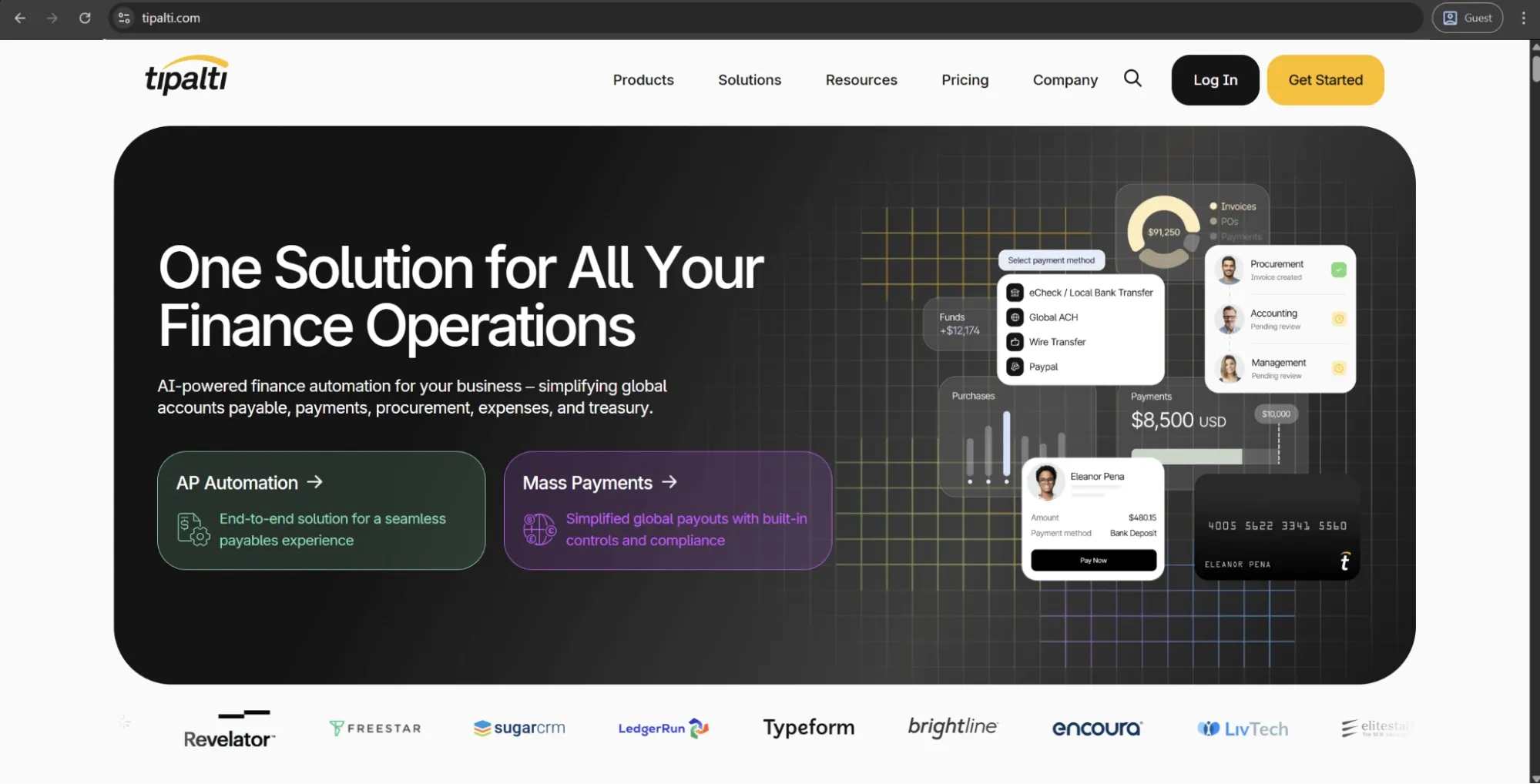
Tipalti is a global financial automation platform that covers areas like accounts payable, supplier payments, and procurement process management. Built on a foundation of payment infrastructure, this platform allows for mass payouts in more than 196 countries in a variety of currencies — positioning it distinctly from procurement-first tools like ZIP.
One of the areas where Tipalti is unique is its functionality around tax compliance and regulatory automation capabilities. The collection of W-9s and W-8s, VAT verification, and native payment error detection make it ideally suited for companies with an extensive network of suppliers in various geographic areas.
Customer ratings:
Advantages:
- Tipalti supports mass payouts across 196 countries in multiple currencies, covering global supplier payment needs natively.
- The platform automates tax compliance workflows, including W-9, W-8, and VAT validation, without requiring third-party tools.
- Tipalti's error detection engine flags payment issues before processing, reducing failed transactions and supplier disputes.
Shortcomings:
- The initial implementation and configuration process demands significant time and technical involvement from finance teams.
- Procurement intake and approval workflow functionality remains shallow compared to dedicated orchestration platforms.
- Pricing scales with payment volume and entity count that makes total cost difficult to predict for growing organizations.
Customer reviews (original spelling):
- Erin B. — Capterra — “It has been generally positive in regards to accomplishing the goal of automating manual billing/collections and payment workflows and speeding up the invoice process, especially. I'm not sure I would say it's the number one tool out there, but it is a workable solution.”
- Danielle M. — G2 — “I like having the option to classify expenses, use credit cards, share employee expenses, and run a procurement process all in one place, with reports that can be ready in minutes. I think the Settings area isn’t very user-friendly. Also, the Reports area isn’t easy to understand, and I don’t always know what to choose.”
Pricing:
Tipalti separates its pricing offerings into two large categories: Accounts Payable and Mass Payments.
Accounts Payable pricing includes three tiers:
- Select — $99/month: Includes unlimited users, supplier self-onboarding, ERP integrations, tax compliance tools, and automated TIN validation
- Advanced — $199/month: Adds 2- and 3-way matching, flexible bill approval workflows, domestic multi-entry infrastructure, and dedicated customer support
- Elevate — custom pricing: Includes all previous features plus FX hedging, global multi-entity infrastructure, priority support, and professional services for custom ERP integrations
The author’s note:
Tipalti would be an excellent choice for finance departments whose primary pain point is payment operations, not the procurement intake. Companies experiencing a high volume of supplier payments will find plenty of different functionalities here that ZIP does not offer whatsoever.
Having said that, teams looking for an intake and approval workflow capabilities will only find the most bare-bones functionality in Tipalti. For this reason, Tipalti is often better viewed as a complementary finance and payment platform or a downstream system rather than a direct replacement for ZIP.
Order.co
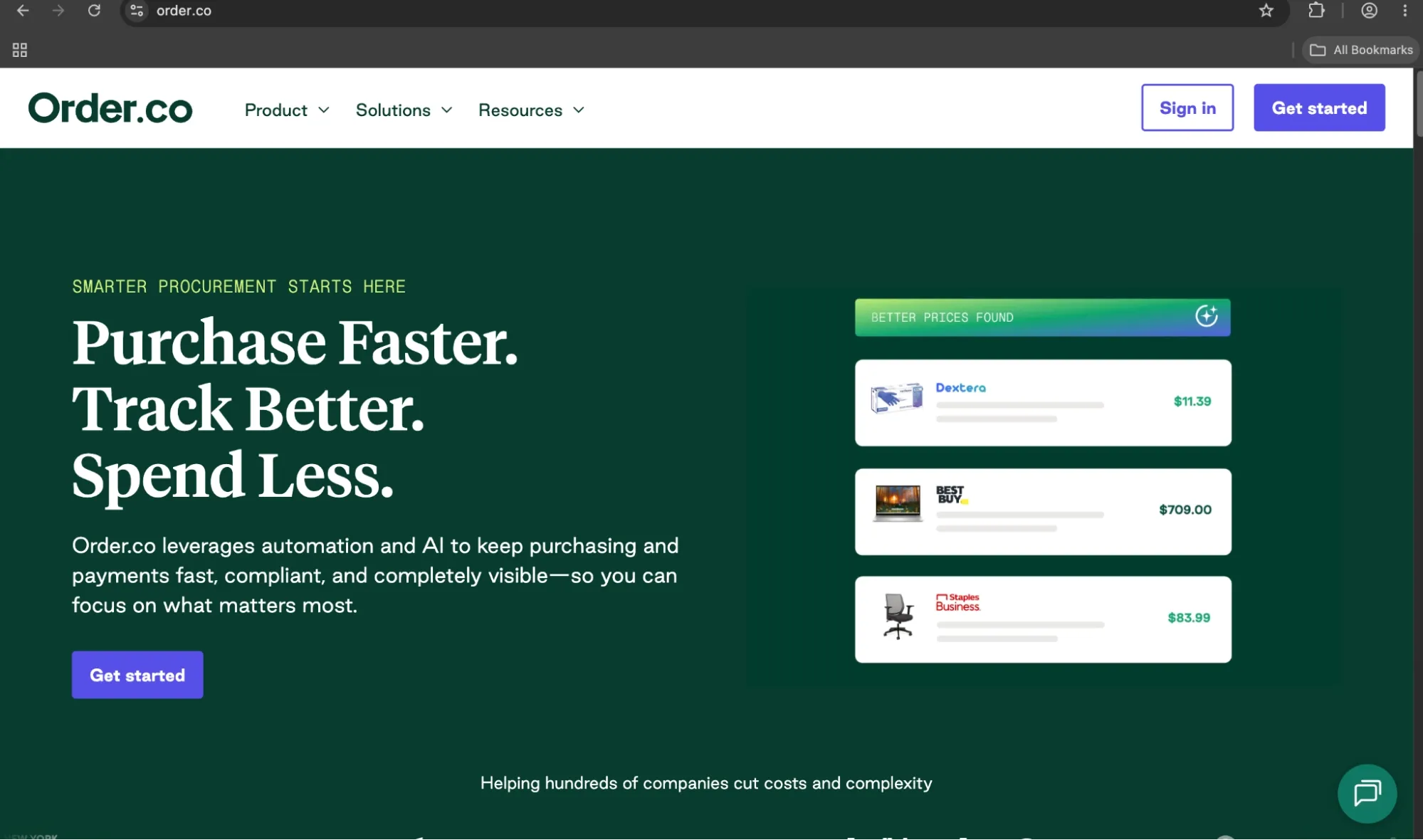
Order.co is a spend management platform that simplifies purchasing, vendor management, and AP with a strong focus on order execution and vendor consolidation. The platform aims to minimize the operational effort associated with managing procurement with a multitude of vendors and categories at once.
What sets Order.co apart from most procurement platforms is its managed purchasing model. Instead of only routing and approving purchase requests, Order.co can actually place and manage orders on behalf of the company. It also consolidates purchases across vendors and unifies invoices, significantly reducing the manual coordination and administrative workload for finance and procurement teams.
Customer ratings:
Advantages:
- The managed purchasing model executes orders on the organization's behalf, directly reducing hands-on procurement workload.
- Order.co consolidates purchases across multiple vendors into a single unified invoice, simplifying AP reconciliation significantly.
- The platform's vendor network gives organizations immediate access to pre-negotiated supplier relationships without building them independently.
Shortcomings:
- Delegating order execution to a third party reduces direct control over supplier relationships and purchasing decisions.
- The platform's functionality shows limitations in complex, multi-entity enterprise environments with sophisticated procurement requirements.
- Integration options with ERP and financial systems are narrower than most dedicated procurement platforms on this list.
Customer reviews (original spelling):
- Alyssa R. — Capterra — “Overall, Order.co has helped streamline source products and has even assisted me in finding cheaper alternatives if they notice a price jump on something I order frequently.”
- Michael L. — G2 — “I really appreciate their flexibility and their ability to customize the product to fit our needs. The implementation was extremely easy, and customer support met our unique requirements. Our stores use the platform every day, and it’s super easy to use—if you know how to shop on a webpage, you know how to use Order.co.”
Pricing:
Order.co doesn’t have any specific pricing information on its official website, choosing to go for the usual “contact us” enterprise approach instead.
The author’s note:
Order.co is a great fit for organizations that wish to outsource hands-on purchasing work instead of only attempting to bring structure into the existing processes. The managed model provides genuine operational savings, but it does require a certain level of trust in a third party when it comes to executing the purchases on behalf of the organization.
That kind of dynamic is what leads to vendor relationships and procurement control considerations being highly relevant in evaluation. Teams with specific supplier requirements or strict purchasing controls should factor that into their assessment carefully.
Precoro
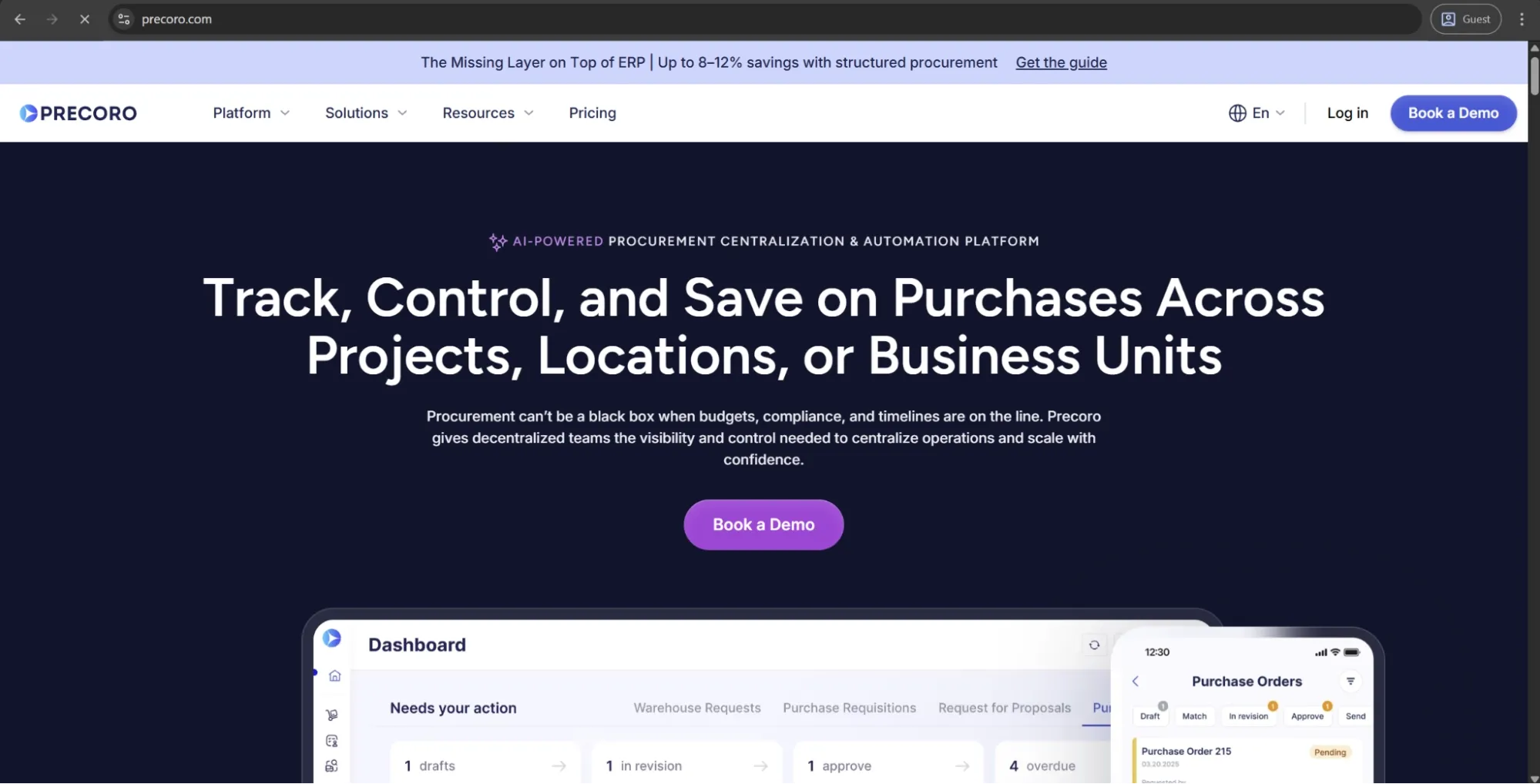
Precoro is the agentic procurement and spend centralization platform for mid-market organizations with distributed operations. Precoro handles the entire procurement lifecycle within a single platform, including intake, purchasing, supplier management, spend control, accounts payable, and payments.
One of Precoro’s core strengths is its multi-entity management capability. The platform is designed for organizations operating across multiple subsidiaries, locations, or business units. It allows them to manage procurement in a structured and centralized way while still maintaining clear separation between entities.
Customer ratings:
Advantages:
- Clean and intuitive interface, regularly cited as one of the easiest procurement platforms to adopt.
- Fast and smooth implementation with no IT involvement, supported by a hands-on onboarding process and a responsive customer success team.
- Multiple AI agents for seamless procurement and accounts payable operations.
- Granular spend visibility across any slice of business, with insights from custom reporting, clean dashboards, and an AI Assistant.
Shortcomings:
- It’s designed to work alongside your ERP, not replace it. Precoro focuses on structuring and controlling purchasing before transactions reach the ERP, which remains the system of record for accounting and financial compliance.
- The platform includes basic inventory and receiving features for simple tracking, but it isn’t a substitute for dedicated inventory or warehouse management systems.
- The system requires detailed upfront setup of workflows, budgets, and rules, which takes time, especially for companies moving from spreadsheets or ad hoc processes (but once the system is configured, teams follow consistent processes automatically).
Customer reviews (original spelling):
- Joni T. — Capterra — “Precoro has been a huge improvement for our organization! It was easy to customize to fit our needs and has been a game-changer for our approval and purchasing process. The support folks at Precoro are so responsive and super helpful, they are dedicated and genuinely care about our success in using the product.”
- Blaine L. — G2 — “I really appreciate the simplicity and user-friendliness of Precoro's interface. Everything is in predictable places, which makes navigating the software straightforward and intuitive. It's impressive how organized the process of sending purchase orders to suppliers has become with Precoro, streamlining the procurement workflow significantly. I also found the initial setup to be very easy, which made the transition smooth and hassle-free. Furthermore, I've found extracting order reports for internal replenishment to be quite efficient with Precoro. Overall, these aspects contribute to a positive and effective user experience with the platform.”
Pricing:
Precoro’s pricing model is relatively simple and consists of three pricing tiers:
- Core — starts at $499 per month billed annually, offers basic procurement features like automated approvals and three-way matching, along with spend & vendor management, a number of integrations (Xero, QuickBooks Online, NetSuite), and reporting analytics.
- Automation — starts at $499 per month billed annually, expanding upon the previous tier with AI-powered AP automation, several procurement operations (intake management, PunchOut catalogs), real-time budget tracking, SSO support, and more.
- The Enterprise tier comes with no public pricing information, but it includes additional integrations, advanced admin controls, no user number limitations, and enterprise-grade data protection.
There is also a separate pricing option for companies interested only in AP automation, starting at $499 per month (billed annually). It includes advanced features for invoice processing, budget and vendor management, approval workflows, accounting integrations, and more.
The author’s note:
Precoro is a strong fit for mid-market finance and procurement teams that need a practical, fully functional procurement solution. Its relatively straightforward implementation and no reliance on dedicated IT resources are additional advantages.
It also delivers strong value by covering the core procurement workflow end to end, enabling teams to standardize purchasing, maintain budget control, and improve spend visibility across multiple entities. This makes it especially effective for organizations that need consistent procurement processes across subsidiaries, locations, or business units without adding unnecessary system complexity or operational overhead.

Coupa
Coupa is an enterprise business spend management platform that offers a suite of many capabilities in the same place, such as procurement, invoicing, expense management, sourcing, and supply chain risk. The suite is built to help large companies integrate all categories of spend — direct, indirect, and services — into one integrated, visible, and controlled location.
The community intelligence capabilities within Coupa greatly differentiate it from the bulk of other procurement solutions. By aggregating anonymous spend and supplier data across all of its customers, it enables companies to compare purchasing patterns, price points, and supplier performance against the market.
Customer ratings:
Advantages:
- Coupa's community intelligence benchmarks organizational spend against anonymized market data, surfacing real pricing and supplier insights.
- The platform covers procurement, invoicing, expenses, and supply chain risk within a single integrated suite.
- Coupa's supplier management capabilities scale effectively across large, globally distributed vendor networks.
Shortcomings:
- Implementation requires substantial time, budget, and dedicated IT resources, making it impractical for leaner organizations.
- The platform's administrative complexity demands ongoing procurement operations support to maintain workflows and configurations effectively.
- Licensing costs place Coupa out of reach for mid-market organizations without enterprise-level procurement budgets.
Customer reviews (original spelling):
- Mai M. — Capterra — “Overall, it has been a true asset and a helpful tool with very specific clients who are incredibly important to my small business!”
- Jacup J. — G2 — “the system can feel slow and clunky at times especially when navigating between modules or uploading receipts through the mobile app It’s powerful but not always the most seamless experience Also some suppliers find the portal confusing which sometimes delays transactions on their end.”
Pricing:
Coupa doesn’t have public pricing information on its official website, but it offers an abundance of partners via the Coupa Partner Xchange Program that can be used to acquire different products from Coupa depending on a company’s location and other factors.
The author’s note:
Coupa offers truly enterprise-level power, but that power comes with an equally large burden of implementation and management. Unless the company in question has built a dedicated procurement function with appropriate IT capabilities, they will likely find the overhead difficult to absorb.
It’s a solution that is most effective for large enterprises aiming to consolidate spend management across multiple business units or geographies. The overall depth of Coupa’s capabilities is likely to be an unnecessary overhead for most smaller companies.
SAP Ariba
SAP Ariba is an enterprise supply chain collaboration and procurement platform that addresses sourcing, contract management, procurement, and supplier management on a scale that suits large organizations with global distribution. It’s one of the most commonly deployed procurement platforms in the enterprise space, with particularly notable domination seen in enterprises already using SAP’s overall ERP ecosystem.
The extent to which SAP Ariba is integrated into SAP S/4HANA, as well as other SAP financial applications, is the most distinctive aspect of the solution on the technical side. If the organization is running SAP infrastructure, Ariba can work as a native extension of the ERP layer and not as a separate procurement layer, removing much of the data synchronization complexity associated with procurement solutions.
Customer ratings:
Advantages:
- SAP Ariba integrates natively with SAP S/4HANA, functioning as a direct ERP extension rather than a separate procurement layer.
- The platform's global supplier network provides organizations with immediate access to a vast, pre-qualified vendor base.
- Ariba's compliance and contract management capabilities meet the regulatory requirements of large, multinational organizations effectively.
Shortcomings:
- The platform carries a well-documented steep learning curve that demands significant user training and change management investment.
- Implementation timelines regularly extend into multiple months, requiring dedicated SAP expertise to execute successfully.
- The user interface feels dated compared to modern procurement platforms, which negatively impacts day-to-day adoption rates.
Customer reviews (original spelling):
- Emma B. — Capterra — “My overall experience with SAP Ariba is a positive one. I had some teething issues getting set up and logged in, but now that has been resolved, it is very easy and intuitive to use. It is easy to navigate through tasks and provides a document trial for financial records.”
- Jeet S. — G2 — “It provides transparency and scalability into compliance, supplier risk and sustainability management. It also enhances buyers, supplier, and user experience by bringing in a digital transformation to the supply chain. Easy to use both from end-user and admin point of view.”
Pricing:
SAP has a dedicated pricing page for its spend management capabilities that doesn’t offer much in terms of pricing clarification. There is a baseline cost ($2,420 per month per user) for the SAP Strategic Procurement package, but it is unclear whether that package includes SAP Ariba.
Ariba is mentioned in the names of two add-ons to add on top of a current pricing plan: SAP Ariba direct materials sourcing add-on and SAP Ariba e-tendering add-on for the public sector, but neither of those plans has a specific price attached to them.
The author’s note:
SAP Ariba is designed for large enterprises that have the complex nature of procurement, compliance regulations, and a global supplier network as their primary drivers. The solution performs exceptionally well against those requirements when it is properly implemented.
Known for having a steep learning curve and a prolonged implementation process, SAP Ariba can be challenging to adopt for organizations that don’t have an established SAP expertise and a sizable budget for implementation.
Procurement Express
Procurement Express is a procurement and purchase order management system designed for small to medium-sized businesses requiring a procurement process without the configuration burden of complex systems. The platform includes purchase requisitions, PO generation, approval workflows, and limited budget tracking — all of which is presented in a deliberately straightforward interface.
The emphasis on the overall speed of adoption distinguishes Procurement Express from its competitors the most. It’s designed to be up and running within hours, not weeks, thus making it a realistic solution for organizations that are new to a formal procurement process and require structure quickly without any prolonged onboarding procedures.
Customer ratings:
Advantages:
- The platform reaches full operational status within hours, making it the fastest procurement solution to implement on this list.
- Procurement Express delivers a clean, intuitive interface that requires no technical background to configure or maintain.
- Budget tracking functionality gives smaller finance teams immediate visibility into spend without requiring ERP-level infrastructure.
Shortcomings:
- The platform doesn’t scale effectively into complex procurement environments with multi-entity or advanced sourcing requirements.
- ERP and financial system integration options are limited compared to every other mid-market solution on this list.
- Reporting capabilities are basic, which restricts the platform's usefulness as organizational spend data grows in volume and complexity.
Customer reviews (original spelling):
- Iberly A. — Capterra — “My overall experience with ProcurementExpress.com has been highly positive. The platform provides real-time visibility into company spending and tracks purchases by department, supplier, or category, which greatly improves financial control. It reduces the risk of unauthorized or duplicate purchases and helps manage unexpected expenses by monitoring available contingency funds.”
- Ken G. — G2 — “The ease of use is exceptional. When I need to create categorized expense flows for company reporting, the program allows me to circumvent outside programs and the time it takes to create the detail.”
Pricing:
Procurement Express offers four separate pricing tiers, with different levels of capabilities targeting specific market segments:
- Basic — $415 per month, includes a self-service setup for a single company, with QuickBooks integration and basic reporting capabilities. Supports up to $10K per month.
- Better — $900 per month, combines the previous offering with Amazon PunchOuts, Sage 50 integration, and standard reporting capabilities. Supports up to $1M per month.
- Best — $2,550 per month, brings in a dedicated implementer, as well as Sage 200 integration, support of up to 5 companies, scan & match capability, and 100+ store PunchOuts. Supports up to $10M per month.
- Enterprise — the only pricing tier with no public cost attached to it, includes everything the company has to offer, including NetSuite integration, Amazon PunchOuts, a dedicated account manager, SFTP access, advanced reporting, and more. Supports up to $50M per month.
There is also a possible one-time setup fee of around $2,000, and all plans require a minimum of 10 users.
The author’s note:
Procurement Express performs very well within its intended scope and target audience. It is a strong choice for organizations that want straightforward, effective purchasing controls without the need for advanced configuration or customization.
However, its simplicity is also a limitation. Teams that anticipate more complex procurement needs over time, such as multi-entity management, advanced sourcing capabilities, or deeper ERP integrations, will likely need to reassess their system as their requirements evolve.
Basware
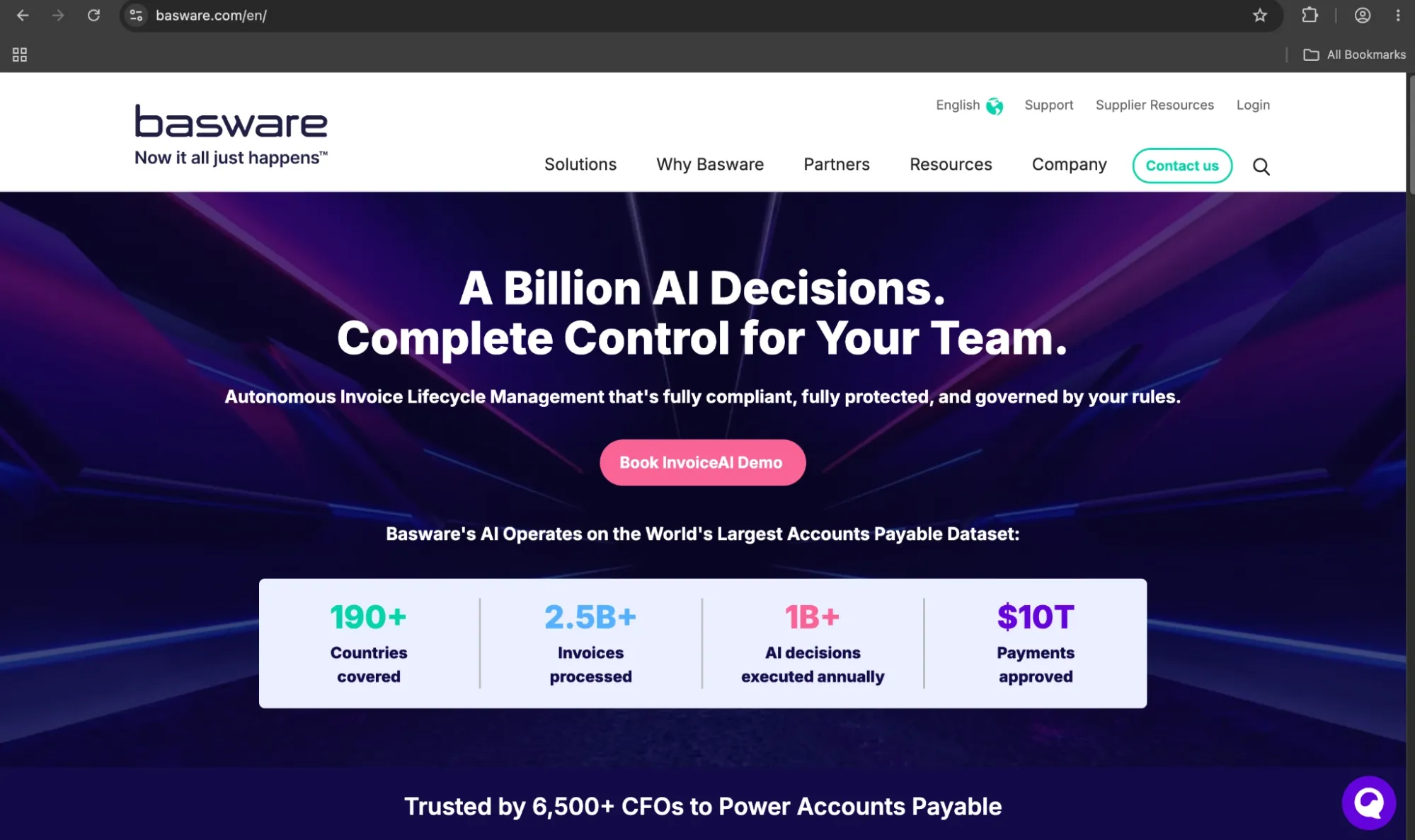
Basware is a procure-to-pay and invoice automation solution designed for organizations who conduct high-volume purchasing and accounts payable activities at scale. The platform covers purchase orders, invoice processing, payment management, and spend analytics within a single suite, with particular strength in automating the transactional layer of the procurement process.
What separates this solution from a lot of procure-to-pay platforms is the size of its commerce network. Basware has a large open network of buyers and suppliers that allows organizations to transmit and receive completely automated e-invoices and avoid the level of manual handling often seen with invoice processing across a large and diverse vendor set.
Customer ratings:
Advantages:
- Basware's open commerce network automates e-invoice exchange with connected suppliers, reducing manual invoice handling at scale.
- The platform's regulatory and compliance coverage is particularly strong in European and Nordic markets with mandatory e-invoicing requirements.
- Basware handles high-volume procure-to-pay operations effectively, maintaining process stability as transaction volumes grow substantially.
Shortcomings:
- Implementation requires significant time and dedicated resources, making it a difficult fit for organizations without an established procurement infrastructure.
- The user interface feels dated compared to modern procurement platforms, which can negatively affect day-to-day adoption across non-finance teams.
- Mid-market organizations may find Basware's pricing and complexity difficult to justify without enterprise-level invoice and purchasing volumes.
Customer reviews (original spelling):
- Ahmet D. — Capterra — “Basware is one of the leading purchase-to-pay/invoice processing platforms. The workflow engine allows the implementation of kind of an approval process regardless of detail and exceptions. This power however comes with a price, the implementation can be challenging and the implementation learning curve can be sometimes steep. Consolidated reports are very useful and the ERP integration is sold, which is a must-have for any kind of P2P Platform.”
- Aditya B. — G2 — “Overall, it improves efficiency, compliance, and transparency in daily operations. While Basware is a strong procure-to-pay tool, some workflows are not very intuitive and require multiple steps for simple actions. The system can also feel slow at times, and certain error messages are not very clear, which makes troubleshooting difficult.”
Pricing:
Basware doesn’t offer specific pricing information on its official website.
The author’s note:
Basware has an especially strong presence in Europe and the Nordic region, where e-invoicing compliance requirements are stricter than in most other countries. Organizations from this region will benefit a lot from the platform's capabilities, which are more developed than in most alternatives.
Its heritage as an enterprise platform also means that it carries certain expectations in terms of implementation time and administrative burden that might be a better fit for existing procurement functions, not for teams that are building their first formal purchasing process.
Ramp
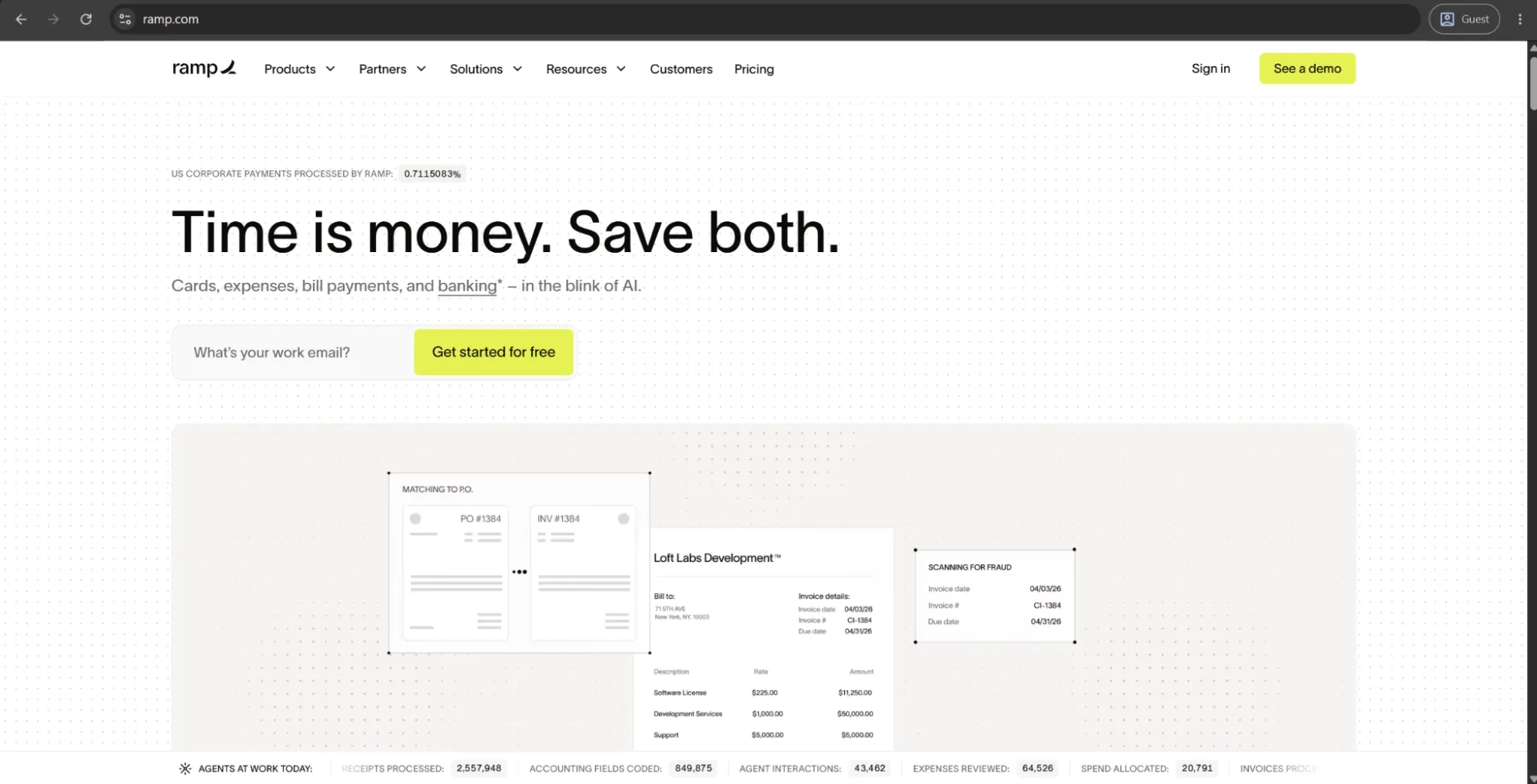
Ramp is a finance operations platform that offers a single spend control system to manage corporate cards, expenses, accounts payable, and procurement processes. It started as a corporate card product that greatly expanded the scope of its procurement capabilities over time, becoming a viable option for finance teams seeking a centralized tool for managing procurement and payment processes.
Where Ramp’s solution stands out the most is its spend intelligence layer. Instead of simply providing a passive record of an organization's spend, Ramp can dynamically process that information to uncover duplicate subscriptions, anomalies in pricing and costs, as well as cost-saving opportunities. This strategic philosophy is key to Ramp's product positioning, helping it differ from platforms that focus purely on workflow structure and approval routing.
Customer ratings:
Advantages:
- Ramp's AI engine continuously identifies duplicate subscriptions, pricing anomalies, and cost reduction opportunities across organizational spend.
- The platform consolidates corporate cards, expense management, and AP into a single finance operations workflow.
- Ramp's speed of implementation and intuitive interface allow finance teams to reach full operational use quickly.
Shortcomings:
- The platform's procurement layer reflects its card-and-expense heritage, lacking the depth of dedicated procurement orchestration solutions.
- Supplier onboarding, sourcing, and vendor management capabilities fall short of what procurement-focused teams typically require.
- Ramp's geographic coverage and payment capabilities outside the United States remain limited compared to global-first platforms.
Customer reviews (original spelling):
- Ashley B. — Capterra — “I've had a good overall experience with Ramp. It's easy to use and saves a lot of time. Customer support isn't that great though. They are slow to respond.”
- Gregory C. — G2 — “The initial setup was very easy as Ramp walked us through the entire process from start to finish. I don't like the reporting. There could be easier ways to export some of the bill data. When I go to export from the bill pay overview tab, sometimes the columns are not on the Excel report.”
Pricing:
Ramp’s basic offering is free, albeit it does have its own limitations — the absence of certain features for expense management, AP, accounting automation, and many other enterprise-level capabilities.
The only payment plan with an actual public cost attached to it is Plus — starting from $15 per month per user and providing a generous range of new features on top of the Free offering, such as advanced intake and approval workflows, auto-coded line items, AI-driven expense reviews, support for multi-entity businesses, and more.
There is also the Enterprise pricing plan, which does not have a specific price attached to it, considering it offers the entire feature set of Ramp. This includes locally funded reimbursements, priority support 24/7, ERP extensions and configurations, employee training, integration setup, validation testing, and many others.
The author’s note:
Ramp is especially well-suited for organizations where finance priorities (cost control, card management, and spend visibility) drive the choice of procurement technology rather than procurement-led requirements.
However, teams that need more advanced procurement functionality, such as complex sourcing, structured vendor onboarding, or multi-stakeholder approval workflows, may find Ramp’s procurement capabilities limited. While it performs well within its intended scope, it does not offer the same depth of functionality as dedicated procurement orchestration platforms.
Omnea
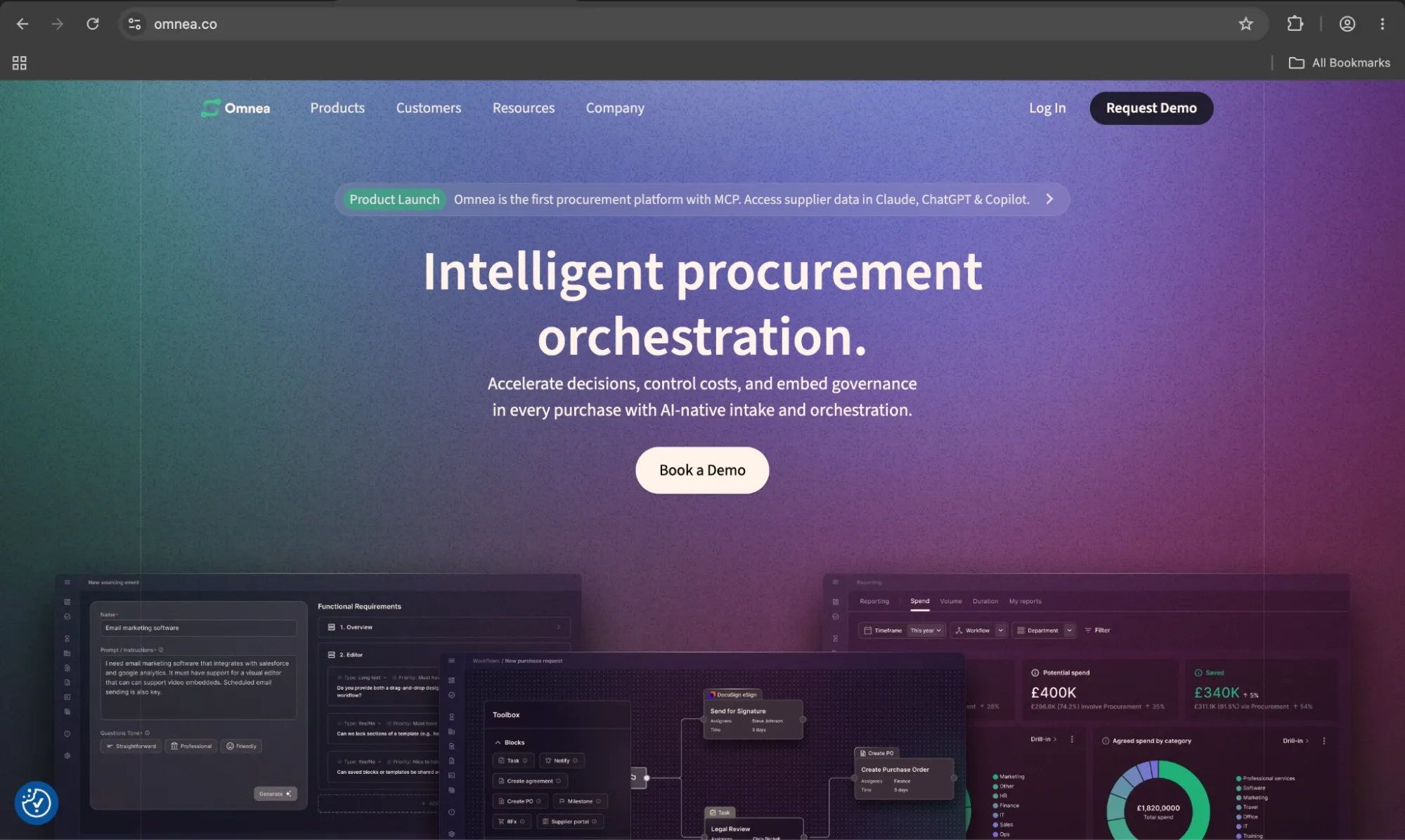
Omnea is a procurement orchestration platform that focuses on intake management, supplier onboarding, and third-party risk. It primarily addresses the front end of the procurement process, with strong emphasis on due diligence and compliance workflows that accompany the onboarding of new vendors. It’s well-suited for organizations that need a structured, auditable intake process without building that framework within a more general-purpose tool.
A key strength of Omnea is its approach to supplier risk and due diligence. Supplier onboarding goes beyond simple data collection and incorporates risk scoring, security reviews, and compliance checks directly into the workflow. This allows procurement and legal teams to manage third-party risk as an integrated part of the procurement process rather than as a separate, disconnected activity.
Customer ratings:
- G2 — 4.8/5 points based on 46 user reviews
Advantages:
- Omnea embeds supplier risk scoring and compliance checks directly into the onboarding workflow, making due diligence a native procurement step.
- The platform structures intake and request management in a way that produces clean, auditable procurement records from the first interaction.
- Omnea's third-party risk assessment capabilities are more developed than most intake-layer platforms available in the mid-market.
Shortcomings:
- The integration ecosystem remains narrower than established platforms, which can create connectivity gaps with existing finance infrastructure.
- Functional depth outside the intake and supplier onboarding layer is still developing compared to more mature procurement solutions.
- Omnea's relatively recent market entry means its long-term platform stability and roadmap carry more uncertainty than incumbent tools.
Customer reviews (original spelling):
- Francisco R. — G2 — “Omnea combines a highly intuitive interface with cutting-edge workflow orchestration. It has helped us automate the most complex and/or tedious parts of our procurement, TPRM, and renewal processes, making these workflows much easier to manage day to day. Also, the team’s commitment to constant innovation and genuine partnership makes them a standout choice in a crowded market. Highly recommended for any forward-thinking procurement or finance teams.”
- Matt B. — G2 — “I feel like the integrations are a little bit harder to get done than what I expected. They have a lot of out-of-the-box integrations or APIs, but they're not as robust as I would like. It's unclear if it's an issue with Omnea, the other companies, or maybe a combination of both. I wish we had known more upfront about the integrations or the APIs.”
Pricing:
Omnea does not have official pricing data available on its website.
The author’s note:
Omnea is a strong option for organizations where third-party risk management and supplier due diligence are material concerns. Its primary client groups are regulated industries, organizations with large supplier networks, and teams that experience compliance gaps in their onboarding processes.
As one of the newer players in the space compared to enterprise veterans on this list, Omnea’s integrations and broader procurement capabilities beyond intake and onboarding are still evolving — something to consider in long-term platform comparisons.
Stampli
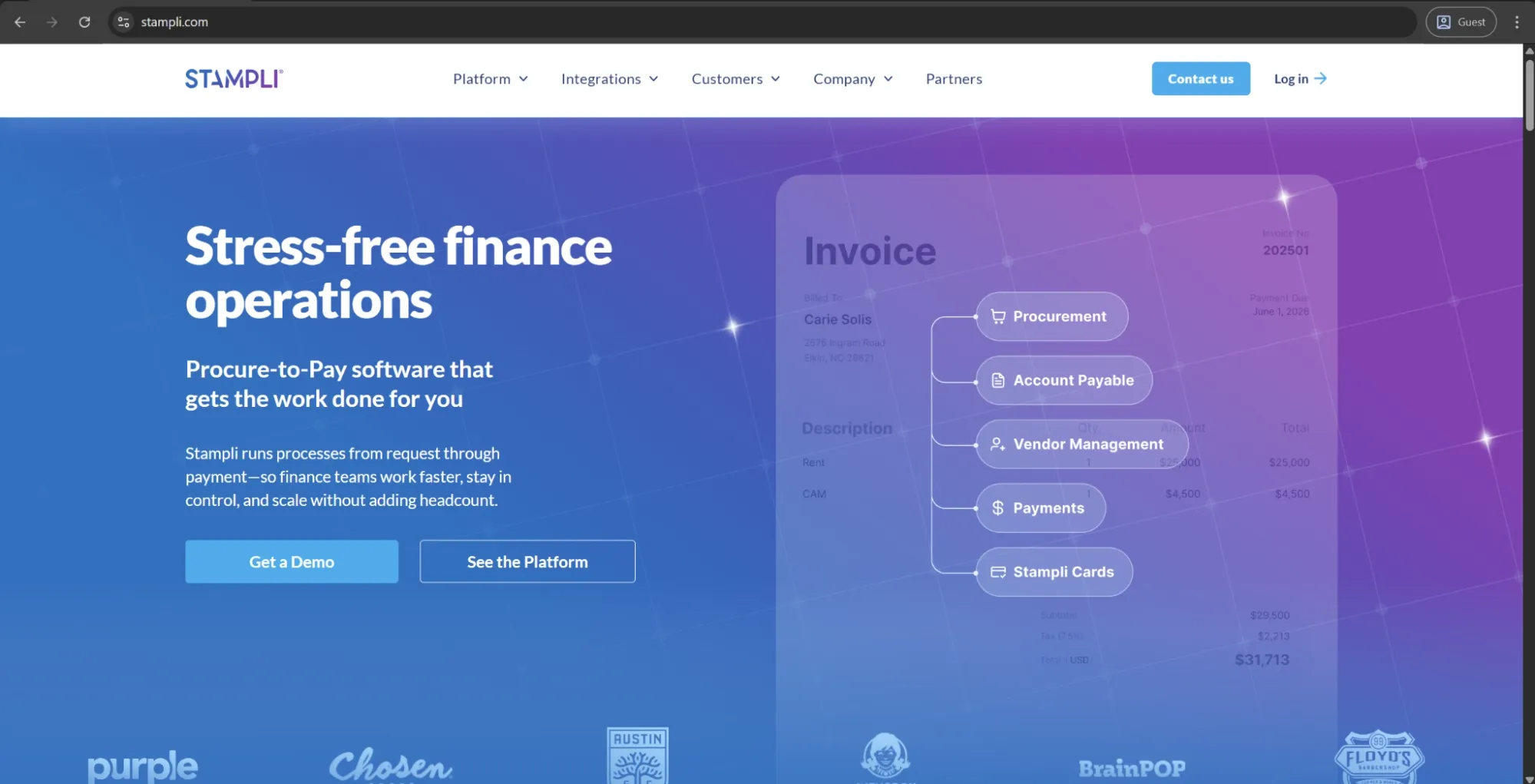
Stampli is an accounts payable automation platform that supports invoice management, approval workflows, and payment processing, with the goal of improving collaboration between finance teams and the wider organization. Its core experience is built around a centralized invoice interface that brings together communication, documentation, and approvals in a single thread, helping replace fragmented email chains and manual follow-ups that often slow down AP operations.
A notable feature of Stampli is its AI assistant, Billy the Bot. It automates invoice coding, learns from historical patterns, detects anomalies, and routes approvals based on past behavior. These capabilities help reduce manual effort for AP teams managing high invoice volumes, while keeping configuration requirements relatively low.
Customer ratings:
Advantages:
- Billy the Bot learns organizational invoice patterns over time, automating coding and routing without requiring manual configuration updates.
- The platform consolidates all invoice-related communication, documentation, and approvals into a single thread per invoice.
- Stampli reduces AP processing time measurably for teams handling high invoice volumes, delivering fast and visible operational impact.
Shortcomings:
- Procurement intake, upstream purchasing controls, and sourcing capabilities sit outside Stampli's core functional investment area.
- The platform's value proposition narrows significantly for organizations whose primary challenge is procurement workflow rather than AP automation.
- Supplier management functionality is limited, making Stampli a weak standalone option for teams with complex vendor relationship requirements.
Customer reviews (original spelling):
- Robert B. — Capterra — “Stampli has significantly improved the speed, accuracy, and transparency of our AP process. Our team can manage a high volume of invoices with less manual work and fewer errors. The workflow is smooth, collaboration is easy, and the audit trail is clean. It has become a core part of our monthly close process and overall financial operations.”
- Tony G. — G2 — “I like Stampli for its ability to review everything at a glance and approve items in batches rather than individually. Making payments with just a few clicks is a feature I find convenient. The advanced search is great to filter for almost anything, and I appreciate the automatic creation of invoices via email to our account.”
Pricing:
Stampli doesn’t have any public pricing data available on the official website. The only way to receive such information is to contact their sales department for a personalized quote.
The author’s note:
Stampli performs well for finance teams that are challenged with invoice volume and AP workflow efficiencies. The AI layer in Stampli genuinely reduces the amount of manual work in a measurable fashion that could be seen fairly quickly after implementation.
Any company considering Stampli as an overarching procurement solution needs to understand its AP-first nature. The platform is not focusing on procurement intake, supplier sourcing, and upstream purchasing controls as its primary investments, and this might be a critical issue for companies that have requirements outside of the invoice-to-payment workflow.
A comparison table
The table below compares all ten platforms across four key dimensions, designed to support the initial shortlisting process. It’s intended as a quick reference, not a replacement for the detailed evaluations above. We recommend using it to narrow your selection before reviewing individual entries to assess the capabilities and limitations most relevant to your business context.
| Tool | Primary focus | Best fit | Standout feature | Implementation complexity |
|---|---|---|---|---|
| Tipalti | Global AP & payments | Mid-market to enterprise | Mass payouts across 196 countries | Medium |
| Order.co | Managed purchasing | Mid-market | Executes orders on the organization's behalf | Low–Medium |
| Precoro | Procurement & budget control | Mid-market | Real-time budget visibility against committed spend | Low |
| Coupa | Business spend management | Enterprise | Community intelligence spend benchmarking | High |
| SAP Ariba | Procurement & supply chain | Large enterprise | Native SAP ERP ecosystem integration | High |
| Procurement Express | Purchase order management | SMB | Operational within hours of setup | Low |
| Basware | Procure-to-pay & invoicing | Mid-market to enterprise | Open global buyer-supplier e-invoice network | High |
| Ramp | Finance operations & spend | SMB to mid-market | AI-driven savings and anomaly identification | Low |
| Omnea | Intake & supplier risk | Mid-market | Embedded third-party risk scoring in onboarding | Medium |
| Stampli | AP automation | Mid-market to enterprise | AI invoice coding and pattern learning | Low–Medium |
How do you choose the best ZIP alternative?
The best starting point is an honest assessment of which part of your procurement process is failing and dragging down the entire workflow. A company plagued by inefficient approval cycles and a lack of spend visibility will not have the same demands as an organization with an enormous invoice volume, worldwide supplier payments, or gaps in vendor onboarding compliance.
Organizations searching for ZIP alternatives often evaluate procurement orchestration software alongside spend management platforms, procure-to-pay systems, accounts payable automation tools, and supplier management solutions. The ideal platform depends on whether the primary goal is intake management, spend visibility, invoice automation, or end-to-end procurement control.
ZIP’s biggest weaknesses tend to arise at the intersection of procurement and deeper finance operations. The alternative that makes sense the most here is the one covering specific ground where ZIP falls short for a specific business — not necessarily the solution with the biggest feature set.
Company size and implementation capacity matter as much as functionality. Coupa and SAP Ariba deliver genuine enterprise-grade capability, but demand the budget, timeline, and internal resources to match. Mid-market teams that need a fully functional procurement solution without that overhead will find Precoro, Procurify, or Ramp a more practical fit, depending on whether their priority is purchasing structure, spend visibility, or finance consolidation.
The most justifiable option is rarely the most powerful or feature-rich solution on the market. A solution that solves the problem your business has today, and the one your team will actually use, would be the most fitting option in most cases, with enough room to grow into the requirements you will have in two years.
Check if Precoro is the right fit
Book a demo to check the fit and see how Precoro can help your team bring purchasing, approvals, budget control, and invoice management into one connected workflow.